
I attended three networking events over the past week or so, and my social battery is full. But it also means I have a lot of new people to connect with, follow up with, and hopefully build relationships with!
I love networking when it feels like an opportunity to genuinely connect with people. I love conversations, learning about what someone does, finding common ground, making introductions, and discovering opportunities to collaborate.
But as someone with ADHD who struggles with remembering names and faces, networking also comes with a few challenges. I can have a great conversation with someone, walk away, and then realize I have absolutely no idea what their name was. Or I remember the conversation but can't remember which person I had it with. Or I leave an event with a stack of business cards and the best intentions to follow up… and then life happens.
Over the years, I've figured out a few things that make networking more manageable for me—and, honestly, more enjoyable for everyone.
Before You Go: Set Yourself Up for Success
Set realistic expectations.
You don't need to meet everyone in the room. You don't need to connect with every person, collect 47 business cards, or leave with a calendar full of coffee meetings.
Go in with the intention of having a few meaningful conversations. You might meet someone who becomes a client, a referral partner, a collaborator, or simply someone you enjoy getting to know. You never know where a connection will lead, and you don't have to figure that out in the room.
Give yourself permission to enjoy the event without turning networking into another task you have to complete perfectly.
Dress comfortably—and like yourself.
Yes, we're at a business event. But that doesn't mean everyone needs to wear a pant suit, look perfectly polished, or dress like someone they're not.
Dress comfortably and within your own style. You want to feel confident and like yourself.
That said, I do think it's worth considering who you want to work with and what they might expect when they meet you. For example, I have multiple bags I use, and I make a conscious choice to bring my nicer bags that coordinate with my outfit rather than my canvas bag that is much more practical. It may seem like a small thing, but it contributes to the overall professional impression I want to make.
You don't need to be someone else. Just be intentional about how you're showing up.
While You're There: Make the Connection
Spend time in conversations instead of trying to meet everyone.
When you find someone you connect with, stay in the conversation. Ask questions. Be curious about what they do, what they're working on, and what brought them to the event.
You don't have to rush to the next person just because there are more people in the room. Sometimes one great conversation is more valuable than ten introductions.
And when you do decide to follow up, make a note of what made you want to connect with that person. Not only will that help them remember you, but it will help you remember why you wanted to reach out in the first place.
Take notes. Seriously.
This is one of the biggest things that helps me.
Sometimes I use the Notes app on my phone. Sometimes I write directly on someone's business card. Sometimes I keep a page in a notebook and jot down people I'm meeting as I go.
It doesn't have to be elaborate. It might look something like:
Karen — photographer
Blue blazer
3 kids
Talked about mutual connection Jane
Interested in scheduling lunch
Yes, the blue blazer and three kids might be what helps me remember Karen. And that's okay!
Find a system that works for your brain. The goal isn't to create beautiful notes. The goal is to give yourself enough information to remember the conversation when you sit down to follow up later.
Make the LinkedIn connection before you walk away.
If you know you want to stay connected with someone, find them on LinkedIn and send the connection request while you're still standing there.
Don't wait until you get home. Don't assume you'll remember their name. Don't put it on your list of things to do tomorrow.
You're already having the conversation. Make the connection while you're there.
Ask for introductions if you're an introvert.
If walking up to someone new feels uncomfortable, find someone who seems to be talking to everyone and ask them to introduce you.
Let those extroverts do a little of the work for you in starting conversations! Most people are happy to make an introduction, especially when they know both people might benefit from connecting.
You don't have to navigate the room alone.
If you're an extrovert, look for the people standing quietly by themselves.
Yes, they may simply need a moment. Be curious, not demanding.
But there are also plenty of people in the room who feel overwhelmed, aren't sure where to start, and would love to connect with one or two people but haven't found an "in" yet.
A simple introduction can make someone's entire experience at an event different.
Don't be afraid to introduce yourself to the hosts and presenters.
They are there for visibility and connection, too!
If you have an opportunity to introduce yourself to a presenter or event host, take it. Just be mindful that they often have a lot of people to talk to and responsibilities to manage.
Keep it brief. Let them know you enjoyed the event, share a little about your experience or what resonated with you, and tell them you'll follow up later.
You don't need to take that moment to tell them everything about yourself or make sure they remember every detail. A brief, meaningful connection—and taking the pressure off them to remember one more person in a busy room—is often a much better approach.
After the Event: Follow Through
Follow up within 48 hours.
This is where the real relationship-building happens.
Reach out to the people you genuinely want to stay connected with within 48 hours. Mention the event, remind them of something you talked about, and let them know why you wanted to connect.
You don't need a complicated message. A simple, personal follow-up is often enough to keep the conversation going.
And if someone reaches out to you? Respond!
They clearly felt you were a priority to connect with. Don't let that opportunity sit in your inbox.
You also don't need to follow up with everyone you met. Remember those realistic expectations you set before you went? Keep them here, too. Focus on the connections that align with your priorities and the relationships you genuinely want to build.
Share your experience afterward.
The hosts put a lot of work and effort into organizing these events. They love hearing about your experience in the room, what you learned, and the connections you made.
Post about the event. Tag the hosts. Tag some of the people you had meaningful conversations with.
It's a great way to continue the conversation, show appreciation, and help other people learn about the event and the people who were there.
You don't have to write a formal review. Share what stood out to you. What did you enjoy? Who did you meet? What conversation are you still thinking about?
Take pictures—and take good ones!
This is one I need to remind myself of.
Take pictures of yourself at the event. Take pictures with the people you've met. Take pictures of the presenters.
And while you're taking them, actually look at the quality!
I can't tell you how many blurry pictures I've taken of presenters, caught someone with their eyes closed, or taken a picture of the screen because I wanted to remember something and completely forgotten to capture the person or people presenting—or myself—at the event.
A few good photos give you something to share afterward and help you remember the experience. You don't need to photograph everything. Just be intentional about capturing a few moments you might want to revisit.
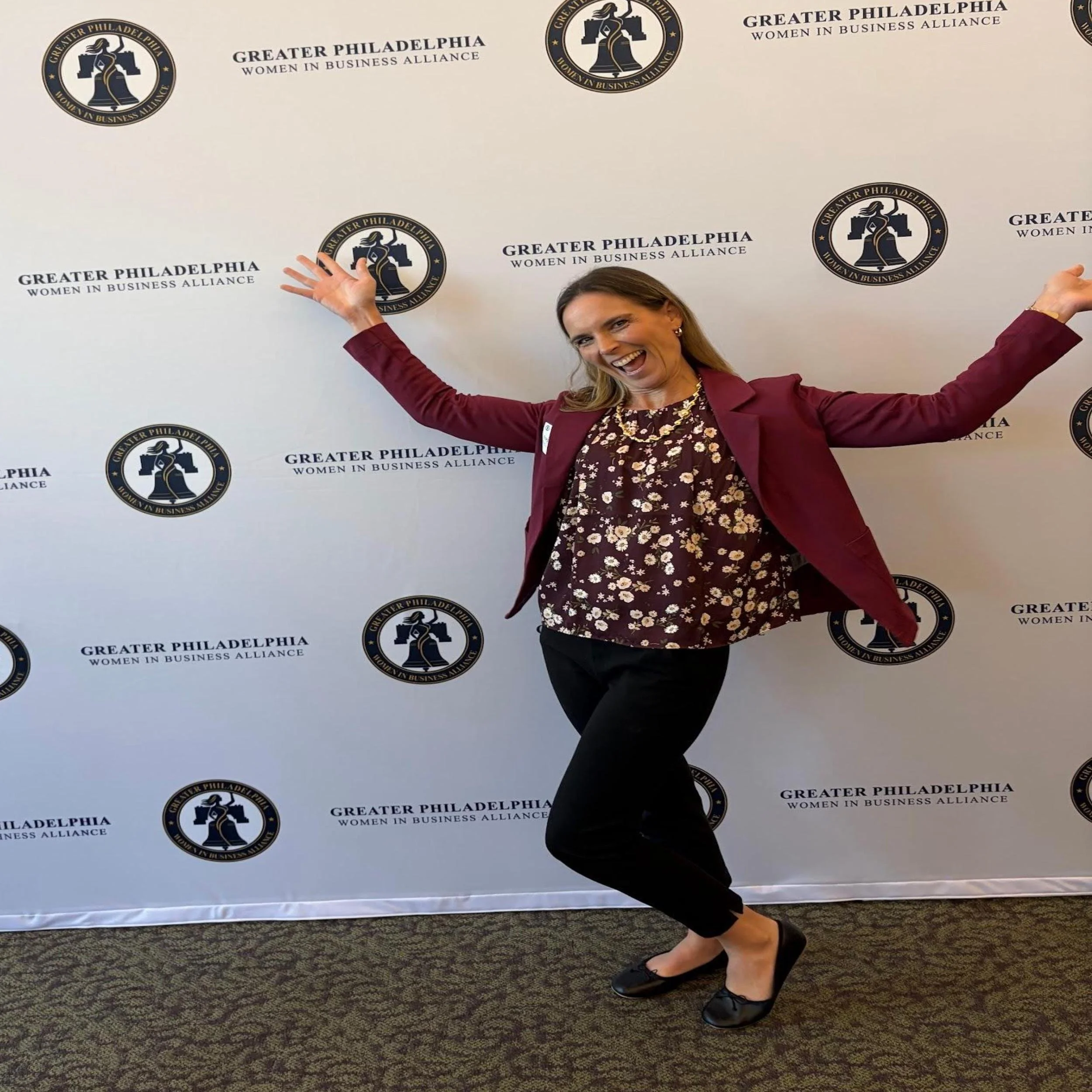
Steph being silly at a recent networking event
Evidence of a photo showing Steph is still working on this strategy 🫣 This photo is not straight, not good quality, poor lighting, I didn’t look at it until I got home - but I had fun anyway.🤷🏼♀️
A Few Bonus Tips
Take the notebook and pen.
There are almost always pens and notebooks available at networking events. Take them and use them!
Write notes. Capture ideas. Jot down something someone said that inspired you.
And if you only use a few pages or decide later that you want to transfer those notes into a different system, that's okay. Those notebooks can still be useful. Share them with your kids. Keep one in the car for restaurant visits.
Tic-tac-toe anyone?
Don't overcomplicate networking.
You don't need a perfect system. You don't need to remember everyone's name. You don't need to be the most outgoing person in the room. You don't need to leave with 20 follow-up meetings scheduled.
You need to be willing to show up, be curious, have conversations, make connections, and follow through on the relationships that matter to you.
For me, that means acknowledging that my brain doesn't always remember names and faces—and putting a few simple systems in place to help me anyway.
Networking isn't about collecting people.
It's about creating relationships. And those relationships are much more likely to grow when you give yourself the opportunity to actually remember them, nurture them, and follow up.
So if you've been avoiding networking because it feels awkward, overwhelming, or like something you're just not good at, maybe try approaching it a little differently next time.
You don't have to do it perfectly.
You just have to connect.
